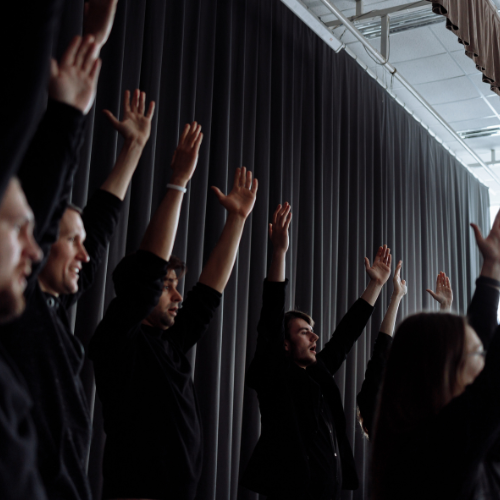
“If I cannot fly, let me sing.” Stephen Sondheim
Good technique gives your voice a healthy foundation, but nerves can still get in the way on the day of the concert. In this post we talk to soprano, singing teacher and hypnotherapist for singers Julie Bale about training your mind as well as your voice.
Tip: practise active relaxation
After singing a phrase, take a moment to reflect on where you can relax further in and around the larynx. Can your tongue be softer? Can your jaw hang a bit looser, with space between the molars? Active relaxation is a powerful technique that helps you avoid strain in practice sessions, rehearsals and live performances.
Expert Q&A with Julie Bale
“Training your mind to work FOR you rather than AGAINST you in performance.”
Can you tell us about your background and how it has influenced your approach to teaching and mentoring singers?
Coming from a non-musical background, I discovered my passion for singing at an early age. Despite limited opportunities, I pursued Music & German studies and training. Working with Janice Chapman (renowned author and singing teacher), I learned the importance of staying updated with voice science. Hypnotherapy helped me overcome imposter syndrome and low self-esteem. This influenced my approach to teaching and mentoring singers, combining technique with mindset training. I believe in healing performance anxieties through self-hypnosis and created Hypnotherapy for Singers.
What are some of your golden nuggets of wisdom for singers who want to develop their singing?
I think my most important advice to a singer would be firstly to trust yourself and take pleasure in being your own unique self. There will be so many people out there wanting to tell you how to do things and it’s easy to lose the sound of your own voice, the voice that led you to singing in the first place. I believe that as singers we have been entrusted with a gift and it’s our job to nurture and take care of that gift as well as to use it and take pleasure in using it.
What are some of the most important lessons you have learned about vocal technique and performance?
Vocal technique is essential, providing a foundation for vocal health and peak performance. Prioritize vocal fitness for successful performances. However, technique alone won't conquer performance pressures. It's crucial to cultivate the right mindset. Learning to be calm, controlling thoughts and emotions, and bypassing stress responses can be achieved. Hypnotherapy for Singers offers practices to retrain the mind and sing with freedom, making performing a joyful experience.
Learn more about Julie’s work
Hypnotherapy for Singers · Instagram · Facebook
Build healthy habits with Vocalise
Vocalise gives you a structured, research-based practice routine for a free and healthy voice, with vocal exercises, physical training for singers and a short morning routine. Try it free for 14 days.
Until next time, keep singing! Esther